Drug-free sprain and strain relief in Tucson, AZ. We help soft-tissue injuries heal with gentle adjusting, guided movement, and progressive exercise.
Chiropractic care for sprains & strains
Get to the root of your sprains & strains
Also known as: Sprain, Strain, Soft-Tissue Injury
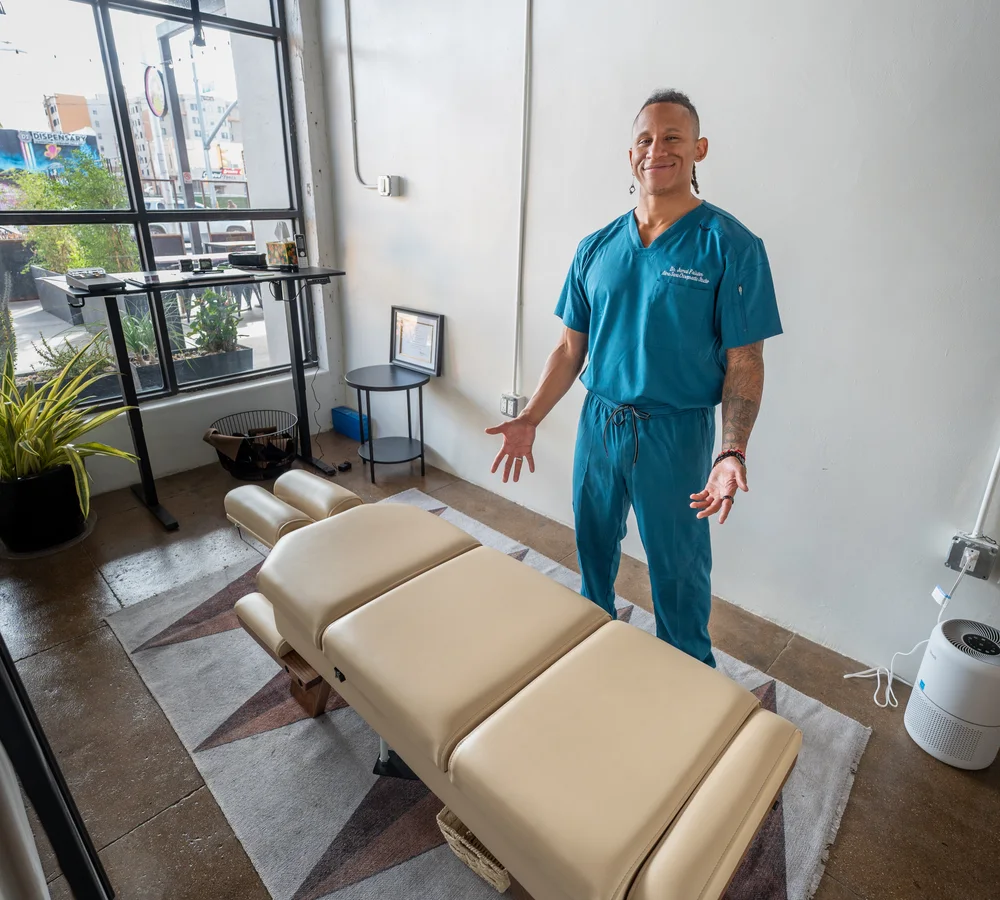
A sprain or strain can sideline you in a hurry, whether it happened at work, on the field, or just stepping wrong off a curb. At Alma Sana Chiropractic Studio in Tucson, Dr. Jamal Früster assesses the exact tissue and grade of injury, then builds a drug-free, active-recovery plan that gets you moving again faster and more completely than rest alone ever could.
✓Pain and tenderness at or around the affected joint or muscle
✓Swelling and bruising in the hours following injury
✓Stiffness or limited range of motion at the joint
✓Muscle weakness or an inability to bear weight normally
✓A feeling of instability or "giving way" in the joint
✓Increased pain with activity and relief with rest in early stages
✓Lingering ache or recurrent injury at the same site
Common causes
Sudden twisting, rolling, or overstretching of a joint
Falls or direct impact during sports or physical work
Lifting a load that exceeds your muscle strength or control
Repetitive overuse that weakens tissue over time
Fatigue (tired muscles lose the coordination that prevents injury)
Poor movement mechanics or muscle imbalances that overload one structure
Returning to activity too soon after a previous sprain or strain
Our approach
How we treat sprains & strains in Tucson
Step 1
Injury assessment and grading
We review the mechanism of injury and perform orthopedic and movement testing to identify which tissue is involved, grade the severity, and screen for fractures or complete ruptures that need immediate referral.
Step 2
A phased, time-bound recovery plan
You get a clear explanation of what we found and a specific, time-bound plan with defined milestones (early pain control, then progressive loading and movement, then return-to-activity testing).
Step 3
Gentle adjusting and progressive rehab
We combine gentle, specific chiropractic adjustment with guided movement and progressive corrective exercise to support healing, restore full strength, and reduce the risk of re-injury.
The basics
Understanding sprains & strains
The words are often used interchangeably, but sprains and strains are different injuries. A sprain is a stretch or tear of a ligament, the tough connective tissue that holds bones together at a joint. A strain is a stretch or tear of a muscle or tendon. Both occur when a structure is pushed past its limit, and both range from mild (Grade I: microscopic tearing, intact structure) to moderate (Grade II: partial tear) to severe (Grade III: complete rupture). Most Grade I and II injuries are excellent candidates for conservative, drug-free care.
The traditional advice (rest, ice, compression, elevation) is a reasonable first step in the first 48 hours, but "rest" alone is where many recoveries stall. Soft tissue heals best with controlled, progressive movement that guides collagen along the right lines and rebuilds the strength and coordination that protect the joint going forward. That is exactly what gentle, specific chiropractic adjustment, guided movement, and progressive corrective exercise provide.
Soft-tissue injuries happen throughout the body, and where you hurt often points to the cause. At Alma Sana Chiropractic Studio we regularly help Tucson-area patients with:
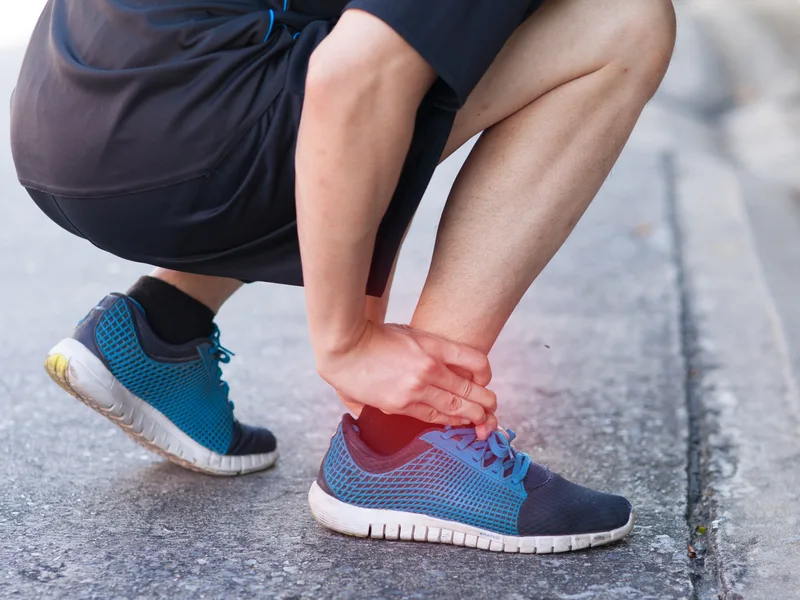
Ankle sprains: the most common joint sprain; lateral (inversion) sprains from rolling the foot outward respond well to early, gentle care and progressive balance rehab. See also our overuse injuries page.
Knee sprains and strains: MCL sprains, quad and hamstring strains, and patellar tendon involvement (see knee pain) often coexist; we address both the tissue injury and the movement mechanics that created it.
Low back strains: paraspinal and quadratus lumborum strains are a leading cause of sudden back pain; early mobilization and core activation speed recovery significantly over rest alone.
Shoulder and rotator cuff strains: partial-thickness strains respond well to gentle, specific adjusting and progressive strengthening before they become full tears requiring surgery.
Wrist and forearm strains: from falls, lifting, or repetitive work tasks; we assess for concurrent nerve involvement and build a plan that accommodates return-to-work timelines.
Work-related sprains and strains: lifting, pushing, and awkward-posture injuries sustained on the job; we grade the injury, document what we find, and build the plan around the demands you are going back to.
When to see a chiropractor in Tucson
Most sprains and strains are not emergencies, but a few situations warrant a quick evaluation. Book an appointment promptly if you notice:
Significant swelling, bruising, or inability to bear weight immediately after an injury
A “pop” at the moment of injury followed by immediate instability
Pain that does not start improving after 48–72 hours of home care
A recurring sprain at the same joint that “never fully healed”
A strain picked up at work that is not settling with rest
A sprain or strain that is keeping you from your sport, job, or daily activity
Red-flag signs (severe deformity, complete loss of function, intense pain disproportionate to the mechanism, or numbness and tingling) suggest a possible fracture or complete rupture. If any of these are present, we will refer you out for imaging or emergency evaluation rather than beginning conservative care.
What to expect at your first visit
Your first appointment takes about 45–60 minutes and is focused entirely on understanding your injury before we treat it. We’ll:
Review your injury history: how it happened, which movements hurt, and how it is affecting your work, sport, or daily routine.
Assess the tissue and grade the injury: orthopedic stress tests and range-of-motion testing to identify exactly which structure is involved and screen for fractures or complete ruptures that need a referral.
Explain what we found: in plain English, with a phased recovery plan, milestones, and a realistic return-to-activity timeline.
Begin care when appropriate: a gentle, specific adjustment and simple at-home rehab can often begin at that first visit to settle pain and protect the injured tissue.
You will know exactly what we are doing, why, and how long it should take. No guesswork, no open-ended visits.
Drug-free sprain and strain relief, without medication or surgery
Anti-inflammatories can take the edge off early pain, but they do not rebuild ligament strength or restore joint coordination, and suppressing inflammation too aggressively in the early days can actually slow tissue healing. Gentle, specific chiropractic adjustment paired with progressive corrective exercise gives the healing tissue exactly what it needs at each stage of recovery: controlled load, guided movement, and progressive challenge that rebuilds the strength and proprioception that protect you going forward. For most Tucson-area patients with Grade I and II injuries, that means a fuller, faster recovery and a meaningfully lower risk of re-injury, without a prescription or downtime from surgery.
Why Tucson-area patients choose Alma Sana Chiropractic Studio
Patients from Tucson, Catalina Foothills, Oro Valley, Sahuarita, and Marana choose Alma Sana Chiropractic Studio for sprain and strain care because we go further than “rest and take ibuprofen.” Dr. Jamal Früster pairs gentle, specific chiropractic care with progressive corrective exercise to guide your tissue through each phase of healing and restore the joint mechanics that a sprain almost always disrupts, and if the injury happened on the field or in training, athlete care adds the return-to-activity testing that tells you when it is safe to go back. The result is a recovery that is faster, more complete, and far less likely to become a recurring problem.
“Alma Sana is a beautiful, peaceful, healing oasis. Dr. Jamal is amazing - he genuinely cares, listens deeply, and shares a wide range of healing resources and workshops. His positive energy and enthusiasm are contagious, and the time and care he pours into the community are truly inspiring. He is an empowering healer, coach, and teacher who guides you from burnout, pain, and stress to more energy, presence, and joy. Through nervous system education, breath work, encouragement, and other healing practices, you learn how to create space and healing for yourself and experience true transformation. So thankful for him and Alma Sana!”
AFAlesha FarrellVerified review · Google”
“Alma Sana Chiropractic has truly been a lifesaver for me. Since beginning treatment, my pain has been significantly reduced, I’m able to do more physically, and I’m even sleeping better.
Dr. J and Lexi are incredibly supportive, caring, and welcoming. They have created a safe and comfortable space where I feel heard and genuinely cared for. I’m so grateful for the positive difference Alma Sana has made in my quality of life and highly recommend them!”
HAHolly A LopezVerified review · Google”
“My neck is feeling way better since I started going to Dr. Jamal. I have been to quite a few chiropractors and he is by far the best I have ever experienced. Highly recommend going to see him if you have any back or neck pain. Thank you so much!!🥰”
NANicolette AndradeVerified review · Google
Good to know
Sprains & Strains FAQ
Still have questions? Contact us. We're happy to help.
What is the difference between a sprain and a strain?+
A sprain is a ligament injury (the connective tissue between bones), while a strain is a muscle or tendon injury. Sprains typically affect joints like the ankle or knee; strains usually affect muscle bellies or the tendons that attach them to bone. Treatment overlaps, but knowing which structure is involved helps us target care precisely.
Can a chiropractor help with a sprain or strain?+
Yes. Chiropractors are trained to assess soft-tissue injuries and to support recovery with gentle, specific adjusting, guided movement, and progressive corrective exercise. For Grade I and most Grade II injuries, conservative chiropractic care is often the fastest and most complete path to recovery, no medication required.
Should I rest or stay active after a sprain or strain?+
Both, strategically. The first 48 hours call for protection and controlled rest to limit swelling. After that, progressive, guided movement consistently outperforms prolonged bed rest by encouraging the healing collagen to lay down properly and by rebuilding the strength and coordination that protect the joint. We map out exactly when and how to reintroduce activity.
How many chiropractic visits will I need for a sprain or strain?+
A mild Grade I injury may resolve in a handful of visits; a partial Grade II tear and the strength rehab that follows typically takes four to eight weeks of care. Dr. Früster will give you a specific, time-bound plan after your assessment, never open-ended treatment.
Will my insurance cover sprain and strain treatment?+
Coverage varies a lot from plan to plan. Send us your details before your first visit and we'll go over your options with you.
When is surgery needed for a sprain or strain?+
Grade III complete ruptures (particularly of the ACL, Achilles tendon, or major shoulder ligaments) often require surgical repair. We screen for these during your exam and refer immediately if we suspect a complete tear. For partial tears and milder injuries, conservative care is typically the first and best step.
How soon should I be seen after a sprain or strain?+
As soon as possible, ideally within the first few days. Early assessment screens for fractures and complete tears (the injuries that need a referral rather than conservative care), and early guided care significantly shortens recovery compared to waiting until pain forces you in.
Do you treat ankle sprains?+
Absolutely. Ankle sprains are among the most common soft-tissue injuries we see, and lateral ankle sprains are notorious for recurring when the surrounding muscles and proprioceptors are not fully rehabilitated. We care for the injured joint and rebuild the stability that keeps it from happening again.
Do you treat work-related sprains and strains?+
Yes. A strain picked up lifting, reaching or repeating the same movement all day is one of the most common things we see. Getting evaluated quickly matters for how fast it settles, and we'll walk you through what the exam found and what the plan is in plain English.
What causes recurring sprains at the same site?+
A sprain that "keeps coming back" is almost always a rehab problem, not a bad-luck problem. If the muscles, tendons, and proprioceptors around the joint were not fully retrained after the original injury, the joint remains unstable and re-sprains easily. Our progressive rehab program addresses exactly this, so the next injury doesn't happen.