Postural correction for forward head, rounded shoulders, and anterior pelvic tilt in Tucson, AZ. Drug-free care from Dr. Früster.
Chiropractic care for poor posture
Get to the root of your poor posture
Also known as: Forward Head Posture, Text Neck, Rounded Shoulders
If you spend hours a day at a desk, driving, or looking down at a phone, your posture is probably taking a hit, and it's showing up as neck pain, back pain, headaches, or just a body that feels stiff and "off." Poor posture isn't a character flaw; it's a mechanical problem driven by modern life. Dr. Jamal Früster helps patients throughout Tucson and southern Arizona identify what postural dysfunction is doing to their spine, and correct it with a personalized, drug-free plan.
✓Head and neck that drift forward from the shoulders
✓Rounded upper back and elevated, rolled-forward shoulders
✓Persistent aching across the neck, upper back, or lower back
✓Headaches that start at the base of the skull or across the forehead
✓Fatigue from the constant effort of holding yourself up against gravity
✓Restricted ability to look fully left or right, or to stand fully upright
✓Discomfort or stiffness after long periods of sitting or driving
Common causes
Prolonged sitting at a desk or computer without ergonomic support
Chronic forward head position from phone and tablet use
Weak deep neck flexors and scapular stabilizers from inactivity
Tight hip flexors and chest muscles that pull the body out of alignment
Prolonged driving with poor seat and mirror setup
Scoliosis or other structural spine changes
Old unresolved injuries that led to guarded or compensatory movement patterns
Our approach
How we treat poor posture in Tucson
Step 1
Thorough postural exam
We photograph your standing posture, perform orthopedic and neurological testing, and assess the full spine to identify which joints are restricted, which muscles are inhibited, and which habits are driving your pattern.
Step 2
A clear, personalized plan
You leave the first visit with a plain-English explanation of your postural findings and a specific, time-bound plan (adjustments, exercises, and ergonomic changes that work together toward a measurable endpoint).
Step 3
Adjustments, rehab, and coaching
We combine chiropractic adjustments to restore spinal mobility, corrective exercises to rebuild deep postural strength, and practical ergonomic coaching so your daily environment stops reinforcing the problem.
The basics
Understanding poor posture
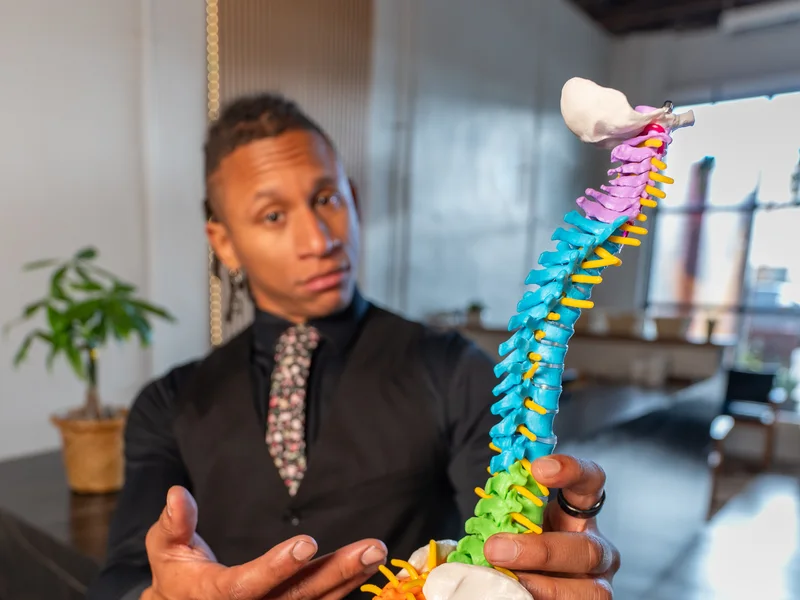
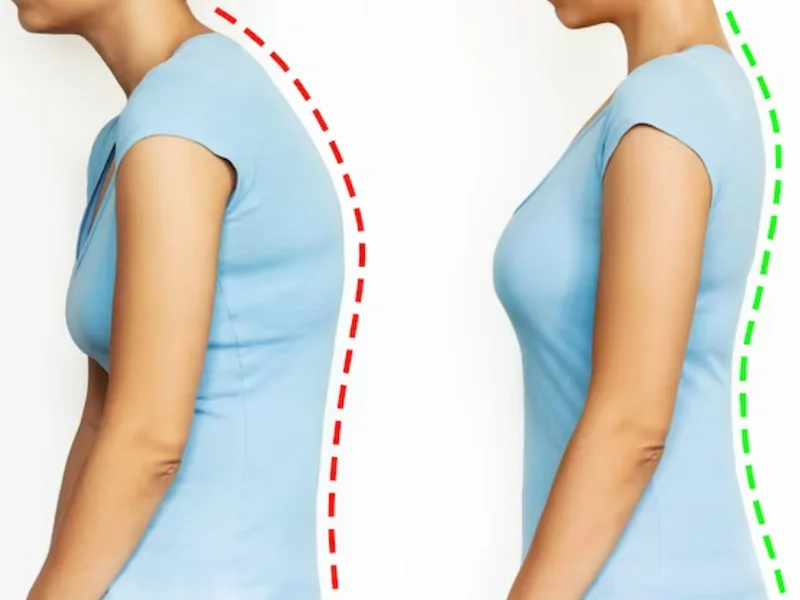
Modern posture problems tend to fall into three overlapping patterns (forward head posture, rounded shoulders, and anterior pelvic tilt), and most people have elements of all three. Forward head posture means your skull has drifted in front of your center of gravity; every inch of that drift multiplies the load on your cervical spine. Rounded shoulders compress the joints of the thoracic spine and shorten the chest and shoulder muscles, pulling the upper body into a chronic slouch. Anterior pelvic tilt flattens the lumbar curve or exaggerates it, placing uneven stress on the lower back discs and facet joints. Over months and years, these patterns drive neck pain, back pain, and headaches.
The encouraging news is that postural dysfunction is mechanical, not structural, meaning the joints, muscles, and habits driving it can be addressed without surgery or medication. Chiropractic adjustments restore motion to the restricted segments that posture has locked down, corrective exercise retrains the deep stabilizing muscles that have switched off, and ergonomic coaching changes the daily habits that keep reinforcing the problem. In practice, most patients notice reduced pain and improved range of motion within the first few weeks of consistent care.
Poor posture isn’t one condition. It’s a cluster of mechanical patterns that often overlap and feed each other. We regularly help Tucson-area patients with:
Forward head posture: the skull drifts in front of the shoulders, multiplying load on the cervical spine and driving neck pain and headaches. Adjustments and deep neck flexor rehab are the foundation of correction.
Rounded shoulders and thoracic kyphosis: the upper back rounds forward, compressing the thoracic joints and straining the muscles between the shoulder blades. Combined adjustments and scapular-strengthening exercises restore the natural thoracic curve.
Anterior pelvic tilt: the pelvis tilts forward, flattening or over-arching the lumbar spine and tightening the hip flexors, which is a primary driver of chronic lower back pain.
“Tech neck” from phone and screen use: a forward-head and rounded-shoulder pattern specifically driven by screen habits, addressed with adjustments, corrective exercise, and ergonomic coaching.
Postural scoliosis: functional lateral curvature driven by posture and muscle imbalance rather than structural bone change, often improved significantly with conservative care.
Your exam tells us which patterns are present and how far they’ve progressed, so your plan is targeted, not a generic stretching routine.
When to see a chiropractor in Tucson
Many people accept poor posture as normal, but the longer the pattern runs, the deeper the mechanical changes become. Consider booking an exam if you notice:
Chronic aching in your neck, upper back, or lower back that doesn’t fully resolve with rest
Headaches that seem to start at the base of your skull or behind your eyes
Difficulty standing or sitting straight for more than a few minutes without discomfort
Noticeable rounding of the shoulders or a head that sits well forward of the collar line
Fatigue or tension that builds throughout a work or school day
Pain that has gradually worsened alongside increasing screen or desk time
What to expect at your first visit
Your first appointment is about 45–60 minutes and focused entirely on understanding your spine before we treat it. Here’s how it goes:
Listen to your story: how your posture has changed, what symptoms it’s causing, your daily work and device habits, and what you’ve already tried.
Examine thoroughly: postural photography, orthopedic and neurological testing, and full spinal assessment to map exactly which joints are restricted and which muscles have shut down.
Explain what we found: in plain English, with a specific, time-bound plan that combines adjustments, corrective exercises, and ergonomic changes in the right sequence.
Start care when appropriate: most patients receive their first gentle adjustment the same day and leave with two or three targeted home exercises to begin retraining their postural muscles.
You’re never locked into open-ended treatment, just a clear plan with a real finish line.
Drug-free poor-posture relief, without medication or surgery
Pain medication doesn’t change the position of your spine or retrain the muscles holding you in a forward-head slouch. Surgery is essentially never indicated for postural dysfunction. Chiropractic care takes the third path: restore motion to the joints posture has locked, rebuild the stabilizing muscles that have switched off, and coach the daily habits that keep the pattern from returning. For most patients in Tucson, Catalina Foothills, Oro Valley, and Marana, that means real, lasting improvement, not just temporary relief. And if your exam ever turns up a finding that warrants imaging or specialist input, we’ll be straightforward with you and help coordinate that care.
Why Tucson-area patients choose Alma Sana Chiropractic Studio
Patients from Tucson, Catalina Foothills, Oro Valley, Sahuarita, and Marana choose Alma Sana Chiropractic Studio because we treat the mechanical cause of their posture problems, not just the pain it produces. Dr. Jamal Früster combines gentle chiropractic adjustments, corrective exercises, and ergonomic changes into one coordinated plan that addresses the spine, the muscles, and the daily habits driving the dysfunction. Whether your concern is forward head posture, rounded shoulders, or the chronic neck pain and back pain they’ve created, you’ll leave your first visit with a clear picture of what’s happening and a specific plan to fix it.
“Alma Sana is a beautiful, peaceful, healing oasis. Dr. Jamal is amazing - he genuinely cares, listens deeply, and shares a wide range of healing resources and workshops. His positive energy and enthusiasm are contagious, and the time and care he pours into the community are truly inspiring. He is an empowering healer, coach, and teacher who guides you from burnout, pain, and stress to more energy, presence, and joy. Through nervous system education, breath work, encouragement, and other healing practices, you learn how to create space and healing for yourself and experience true transformation. So thankful for him and Alma Sana!”
AFAlesha FarrellVerified review · Google”
“Alma Sana Chiropractic has truly been a lifesaver for me. Since beginning treatment, my pain has been significantly reduced, I’m able to do more physically, and I’m even sleeping better.
Dr. J and Lexi are incredibly supportive, caring, and welcoming. They have created a safe and comfortable space where I feel heard and genuinely cared for. I’m so grateful for the positive difference Alma Sana has made in my quality of life and highly recommend them!”
HAHolly A LopezVerified review · Google”
“My neck is feeling way better since I started going to Dr. Jamal. I have been to quite a few chiropractors and he is by far the best I have ever experienced. Highly recommend going to see him if you have any back or neck pain. Thank you so much!!🥰”
NANicolette AndradeVerified review · Google
Good to know
Poor Posture FAQ
Still have questions? Contact us. We're happy to help.
What causes poor posture?+
Poor posture is almost always a combination of mechanical factors (prolonged sitting, forward-head screen habits, weak deep stabilizing muscles, and tight chest and hip flexors that pull the body out of alignment). Old injuries and unresolved pain can also lead to guarded movement patterns that reshape posture over time. A thorough exam identifies which of these is driving your pattern so we can target it directly.
Can a chiropractor help with poor posture?+
Yes. Chiropractic care targets the restricted spinal joints that posture has locked down, while corrective exercise retrains the muscles that have switched off. We also provide ergonomic coaching to change the daily habits keeping you in a forward-head or rounded-shoulder pattern. Most patients see meaningful improvement within the first few weeks.
How many visits will I need to correct my posture?+
It depends on how long the pattern has been developing and how much structural change has occurred. After your exam, Dr. Früster gives you a specific, time-bound plan with a realistic endpoint, not open-ended treatment.
Will my insurance cover postural correction care?+
Coverage varies a lot from plan to plan. Send us your insurance details before your first visit and we'll go over your options with you, including self-pay.
Is chiropractic safe for forward head posture?+
Yes. We screen every patient on the first visit and tailor the approach to your spine. Gentle cervical and thoracic adjustments are a safe, well-studied method for restoring the joint mobility that forward-head posture restricts.
Can poor posture cause headaches?+
Frequently, yes. Forward head posture increases the load on the upper cervical spine and strains the muscles at the base of the skull, which are a leading driver of tension-type and cervicogenic headaches. Correcting the postural mechanics often reduces headache frequency and intensity at the same time.
Do I need a referral or imaging before coming in?+
No referral is needed in Arizona. Most postural dysfunction doesn't require imaging. We screen for any red flags during your exam and order imaging only when it will change your treatment plan.
Can poor posture cause back pain?+
Absolutely. Anterior pelvic tilt and rounded thoracic posture place abnormal, uneven loads on the lumbar and thoracic discs, facets, and supporting muscles. Over time this leads to the chronic low back and mid-back pain that many desk workers live with. Correcting the postural drivers is one of the most reliable ways to achieve lasting back pain relief.
What is forward head posture?+
Forward head posture describes the position where your skull has shifted forward of your body's center of gravity, typically from prolonged screen or phone use. Each inch of forward drift multiplies the effective weight your cervical spine must support, straining the muscles, joints, and discs of the neck and upper back.
What is "text neck"?+
Text neck is a common name for the forward-head, rounded-shoulder posture pattern that develops from looking down at a phone or tablet for long periods. It is one of the fastest-growing postural complaints we see in Tucson-area patients of all ages, and it responds well to the combination of adjustments and corrective exercise we use here.
How soon will I see results from postural correction?+
Many patients notice less pain and improved range of motion within the first one to three weeks of care. Full postural correction (restoring the spinal curves and retraining the deep stabilizing muscles) takes longer, which is why completing your prescribed exercise program is essential for lasting results.